
I got a $93,779-per-year job offer this week. It took me exactly 5 hours to turn it down.
Not because the money wasn't good. Not because I didn't want the work. But because of what happened when I started digging into what I'd actually be walking into.
Nearly three months of radio silence followed by sudden desperation. Reddit posts from career employees writing obituaries for their own workplace. A department gutted by mass layoffs, now scrambling to fill chairs with warm bodies.
This is the test that made the decision obvious—and why you need it before your next big choice.
I did what any rational person does when facing a major life decision: I went digging. And what I found on Reddit made my blood run cold.
These weren't anonymous trolls or disgruntled former employees. These were current Patent Office examiners, posting in real time about their workplace:
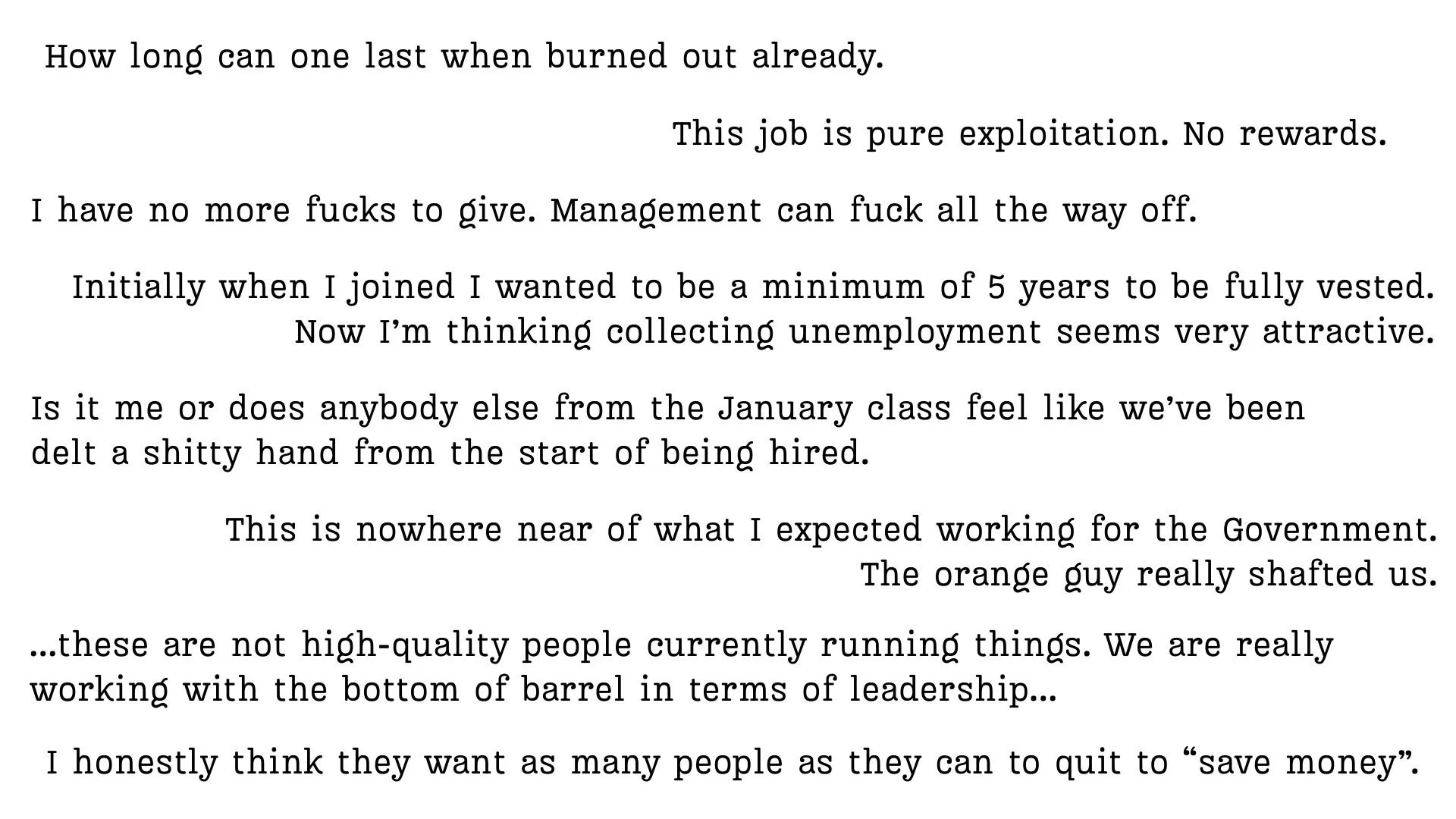
Real posts from current and former USPTO employees online
But the one that really got me was from someone in the January hiring class—people who started around the same time I would have:
'Is it me, or does anybody else from the January class feel like we've been dealt a shitty hand from the start of being hired.'
These weren't people complaining about difficult work. These were people describing institutional collapse from the inside. People who joined expecting a career and were already fantasizing about unemployment benefits instead.
Then I found the missing piece. The DOGE disaster had gutted the Patent Office last year—hundreds of examiners furloughed or retired early. This wasn't just workplace stress. This was the aftermath of institutional collapse.
The desperate hiring suddenly made sense. They weren't recruiting me for my potential—they were scrambling to fill chairs with warm bodies after the experienced people fled or got pushed out.
One post from a career employee crystallized everything:
“Those who remain dedicated public servants at the PTO have 3 more years before the pendulum swings back. The grass would be greener on the other side.”
Another Reddit user said:
“Damn well I didn’t expect the probationary sabotage to happen so immediately. I wouldn’t advocate for any of my loved ones to work here currently because I wouldn’t want them to ruin their chance here based on vindictive behavior aimed at owning libs because ‘we’re all bad’.”
Translation: Even the people staying were telling outsiders to run.
This wasn't a job offer. It was a rescue mission—except I'd be the one needing rescue.
That's when it hit me. I wouldn't be joining a team—I'd be joining the cleanup crew for a department in crisis. Walking into an understaffed office where the survivors were burnt out, the institutional knowledge had walked out the door, and management was scrambling to keep the lights on.
The three-month radio silence suddenly made sense. They weren't processing my application—they were probably figuring out how to rebuild a department after hundreds of people fled or got pushed out.
Meanwhile, during those same three months of their silence, I had built something real. Teaching credentials earned, IELTS certificate secured, Vietnam paperwork sorted. I was creating while they were collapsing.
That $93,779 wasn't an offer—it was hazard pay for working in a place where career employees were posting their misery online in a public forum.
I want to give you some additional backstory —
In September 2025 I found out that the USPTO lifted its hiring freeze over the summer, so I applied for an open position, since I was striking out in my search for a job teaching English in Mexico.
The first red flag was an optional essay question that appeared when I filled out the USPTO job application online. The question was:
“How would you help advance the President's executive orders and policy priorities in this role? Identify one or two relevant executive orders or policy initiatives that are significant to you and explain how you would help implement them if hired.”
I was so turned off by this political and inappropriate question that I declined to answer.
This was the framework I used to make my choice in just a handful of hours. It came down to four simple tests that cut through all the noise. I call it The Trust Test—and it works for any major life decision:
Test 1: The Values Check. Are they asking you to compromise your professional standards? That political essay question wasn't about patent examination—it was about loyalty to executive orders. Red flag.
Test 2: The Gut Check. What would actually make *me* happier? Sitting in Belize, four weeks after my second interview, the answer was obvious: Vietnam. Trust that voice.
Test 3: The Evidence Check. What are the people inside actually saying? Those Reddit posts weren't workplace complaints—they were institutional obituaries written by survivors.
Test 4: The Timing Check. Why the desperation after months of silence? Three months of radio silence followed by sudden urgency screams crisis, not opportunity.
When all four tests point the same direction, the decision makes itself. The money becomes irrelevant. The prestige becomes a trap. The 'opportunity' reveals itself as someone else's emergency.
What I learned: Other people's emergencies are not your opportunities. When someone offers you hazard pay disguised as a career move, trust your gut over their urgency.
The Patent Office needed warm bodies to fill chairs after institutional collapse. I needed a life that aligned with my values and fed my curiosity. Those aren't the same thing, no matter how much money they throw at the gap.
Three months of silence taught me something valuable: While they were figuring out how to rebuild from chaos, I was building something real. Teaching credentials, visa paperwork, a clear vision of what I actually wanted.
When their desperation finally surfaced, I had already chosen my path. Sometimes the best decision isn't about saying yes to the right opportunity—it's about having the courage to say no to the wrong one, even when it comes with a big number attached.
Trust the safety net you've built. Trust the work you've already put in. And trust that voice in Belize that knows what would actually make you happier. The show goes on. Sometimes in places you never expected, with stories worth writing that you couldn't have planned.
